

One world. Every voice. Your language.
The bridge between science and AI.
Every scientist now has access to AI. Almost none of it is doing scientific work yet. We build the tools that close that gap, and we teach scientists how to use them without handing over their judgment.
There's a free tool on this page, and it's yours. We'd rather introduce ourselves with something that works. More are on the way, and so is the community where scientists work this out together.
The gap
Access isn't the problem anymore.
Scientists adopted AI faster than almost any profession. What they were handed was a general-purpose chat window, no guidance, and a warning not to get it wrong. The tools aren't built for scientific work, and nobody is teaching the craft.
of researchers now use AI tools in their work, up from 57% a year earlier.
had heard of the purpose-built research tools surveyed. Most reach for a general chatbot instead.
feel their organization offers adequate support. 57% name missing guidelines and training as a primary barrier.
Source: Wiley, ExplanAItions 2025, survey of 2,430 researchers worldwide, August 2025.
How we work
From prompt to evidence.
Good scientific AI work is a craft: a precise instruction, grounded in your own evidence, with the check kept where a scientist can make it. Everything we build and teach sits on those three layers.
Ask precisely
A vague question gets a confident, useless answer. The instruction is the instrument, and it can be designed as carefully as any method.
Ground it in your evidence
Answers come from your papers, your data, and the primary guidance, cited back to the file and the page. Where a source doesn't exist, the tool says so.
Keep the check with the scientist
Automate what repeats, verify what matters. You stay the person who can defend the result, which is the only version of this worth having.
What we do
What we actually build.
Software, teaching, and the standards that hold both together. The mix keeps growing. Every tool starts as a problem we hit ourselves, or watched a colleague lose a week to.
Tools for scientific work
Finished software, not notebooks: calculators that show their arithmetic, extractors that keep the page number, search that answers from your own files.
Systems built for one team
When nothing off the shelf fits how your group works, we build it around your data, your formats, and your sign-off.
Workshops and training
Hands on your own material, in English or German, from complete beginners to people already deep in it. Conference courses, team sessions, and standing programs.
Teaching in the open
Every tool gets a walkthrough: what it does, how to set it up, where it fails. Recorded, free to watch, no prior experience assumed.
Standards and strategy
Where AI belongs in your science, what an output has to prove before anyone relies on it, who signs off, and how a result stays reproducible in two years.
A community across fields
Where scientists compare what worked, in their own language, with the people building the tools in the room. Everyone on the email list hears first.
Numbers that arrive with their method attached.
Dose, exposure, and safety calculations from your own study data. It converts your data to a human equivalent dose by the regulatory method, applies your safety factor, and shows the arithmetic and the source for every step. What comes out is finished work: you can put it in a report and answer the question of how you got there.
It's free, it runs in your browser, and there's nothing to install.
Every divisor and limit the calculator uses, with its source, is on the constants reference.
The range
The same three problems, in every field.
A soil lab, a clinical group, and a marine survey don't share a conference. They share a week.
Reading
Literature, reports, PDFs, and your own archive, answerable and cited back to the page it came from.
Analysis
Numbers that show their own method, and files in six formats turned into one dataset you can work with.
Writing
Proposals, SOPs, manuscripts, and the plain-language version for whoever is in the room.
Teaching
Built for scientists whose job isn't software.
You shouldn't have to become an engineer to get value out of this. Our tools arrive finished: nothing to assemble, no pipeline to wire, no notebook to keep alive. You open it, you use it, you can see how it got there.
The teaching works the same way. We sit with your own documents rather than a canned demo, and we say plainly where these tools help and where they quietly don't. Every tool we release gets a recorded walkthrough, so the setup is never a mystery you have to solve alone.
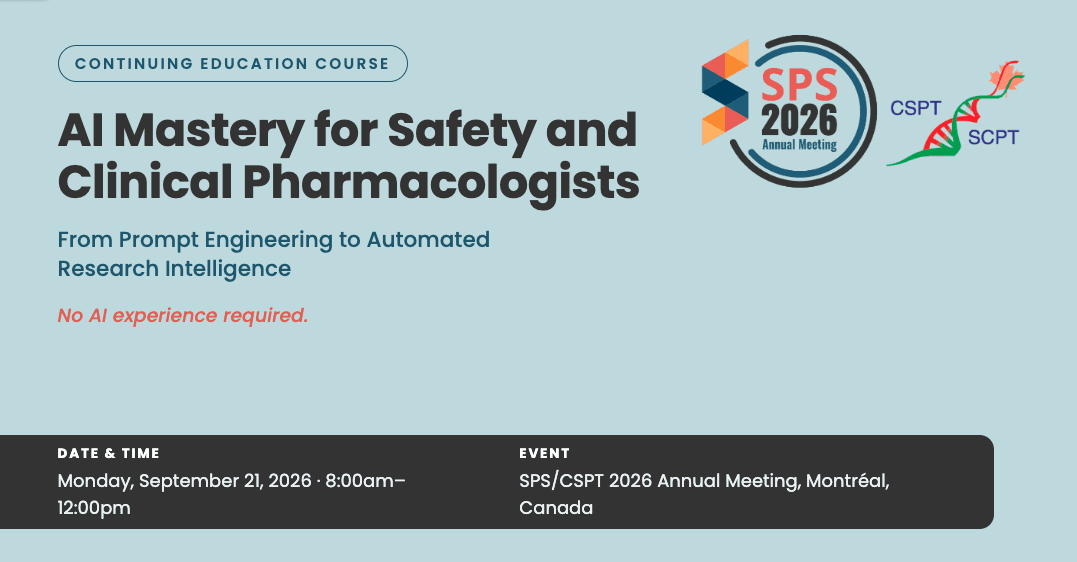
We taught this in Montréal.
A four-hour continuing education course at the SPS/CSPT 2026 Annual Meeting, with a laptop on every desk and no AI experience assumed.
About us
We are ScienceExperts.ai.
Two people, one workbench. We build every tool here together and use it on our own work before anyone else sees it. Nothing ships because it demos well.
We build the way we'd want to receive the work: the method visible, the sources attached, the arithmetic laid out where you can follow it. That isn't caution, it's what makes a result usable the moment it arrives, in a report, a submission, or a meeting where someone asks how you got there.
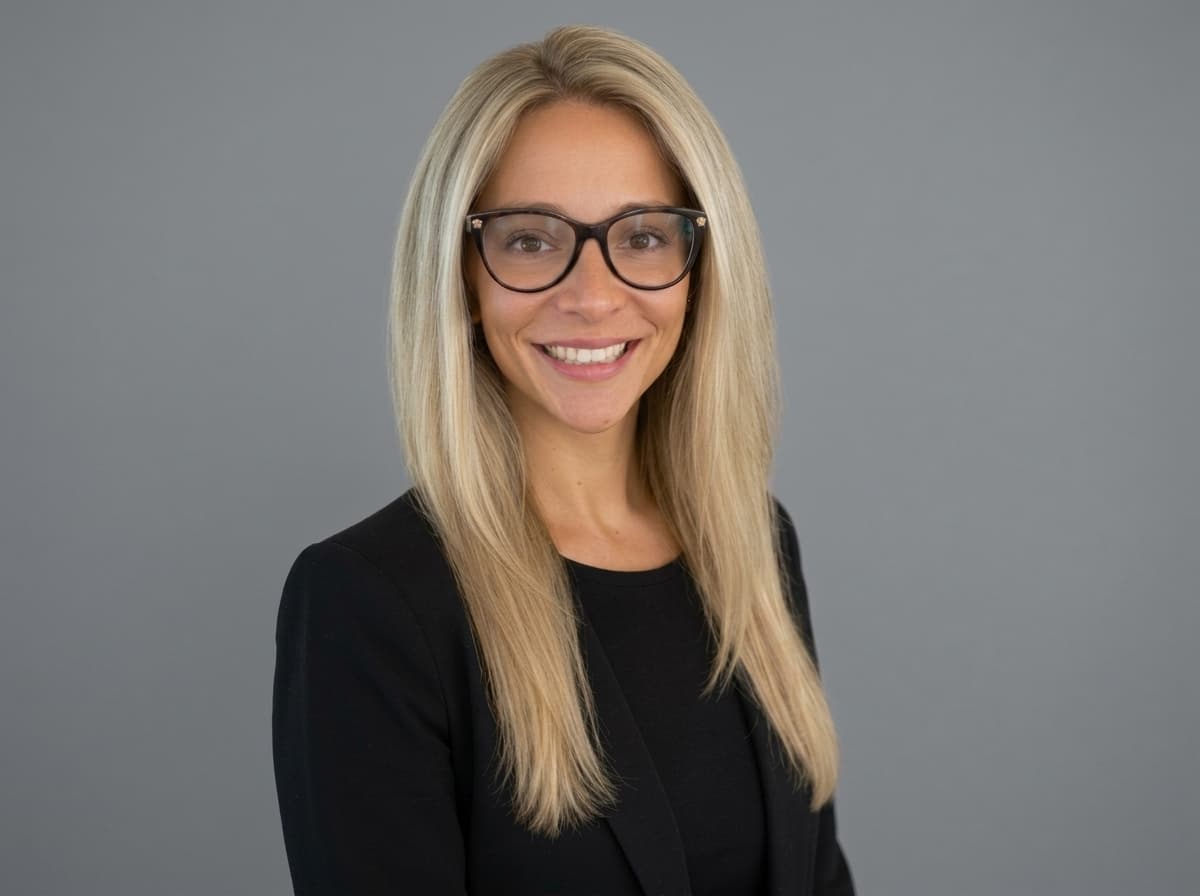
Lutfiya Miller, PhD, DABT
Dr. Miller is a board-certified regulatory toxicologist who has spent her career on science that gets read by regulators and relied on by people in trials. She knows what finished scientific work looks like, and she builds.
That training set the bar for everything here: a result should carry its own evidence, and a tool should make a scientist faster without making them less accountable.

Chris Müller
Chris Müller builds AI systems and research pipelines, and he's based in Germany. He works on the part nobody sees: how a document gets read, how a source stays attached to a claim, and what a tool does when a model is confidently wrong.
He teaches this the same way he builds it, hands on the keyboard, in English and German.
Neither of us could have built this alone, and that's the interesting part. A scientist who learned to build and a builder who learned the science end up somewhere neither would have reached: tools that hold up scientifically because both standards had to be met at once.
Water, warming, disease, food, safety. The questions arriving now are bigger than the hours available to answer them, and the fastest gain on the table isn't another instrument, it's a generation of scientists who are genuinely good with these tools. So we teach what we know, we say what doesn't work yet, and we learn the rest in the open with the people using it.
Work with us
Where to start.
The right starting point depends on what your group is trying to get done. A short call is the fastest way to work out which one it is.
AI readiness review
We look at how the work actually moves through your group, then come back with where AI would genuinely help, where it wouldn't, and what each option would take.
Training and adoption
Sessions for scientific teams, shaped around what your group needs to get out of it: a walkthrough, hands-on time with the tools, or both. Plus what to do the week after, so it sticks.
Something built for your work
When nothing off the shelf fits how your group works, we build it: a calculator, a document pipeline, a search across your own files. Built to the same standard as everything on this page, and yours to keep.
Questions we get asked.
Do we need AI experience?
No. Sessions are built for complete beginners and experienced users in the same room, and the tools are finished software you just open and use.
Is this only for pharmaceutical or regulatory science?
No. The standard we work to came out of regulatory toxicology, where a number has to survive review. The work itself, reading, structuring, analysing, and writing, is the same in a soil lab and a clinical group.
What happens with our data?
Your data stays yours. We bring our own worked examples to sessions, so nothing of yours has to move. When a project does involve your data, the specifics are agreed in writing first.
Is the community open?
Not yet. It's close. Leave an email and you'll hear the day it opens, before we announce it anywhere else.
Which models do you use?
Whichever fits the task, and we'll tell you which one and why. Some of what we build doesn't use a model at all: when a calculation has one correct answer, we compute it directly, and let the model do what it's genuinely good at, like reading, searching, and drafting.
Stay in the loop
Leave your email and you'll hear it first.
One list, one email address. Here's what it gets you.
- Each new tool as it's finished, with a walkthrough and a straight answer on how to get access.
- What we learned building it, including where it fell short and what we'd do differently.
- First notice when the community opens, ahead of any public announcement.
Bring a real problem.
Tell us the part of your week you'd hand over if you trusted it. We'll tell you straight whether that's buildable today, roughly what it takes, and what we'd try first.